Showing posts with label Communications. Show all posts

Thursday, February 18, 2016

Writing to Win the Wrong Battle


Golf needs help with a problem that’s not unlike a challenge faced by college football. Despite a popularity that sends television ratings soaring, these sports are in need of more real-world participants. Golf is hurting for more recreational players and Universities that field college football teams need more paying fans in the stands. There are a lot of things going right for golf these days – the Big 4 of Spieth, Day, Fowler, and McIlroy for one example – but a major retailer of golf clubs sees things in a different light. Plus, golf is not immune to today’s controversial environmental issues.


There are many working parts to the golf industry. As the popularity of the game of golf goes, so goes the viability of a long list of dependent industries, such as:
  • Golf course design 
  • Golf club, ball and other equipment manufacturing 
  • Golf apparel 
  • Golf course turf maintenance 
  • Domestic and international golf travel brokers 
  • And much more! 
Promoting the game of golf is a duty that falls on most, if not all, of these related industries. But one group that I think bears the brunt of this responsibility is golf writers. I’ve been a reader of Golf Digest since my teenage years and I’ve never found the stance taken by golf writers against the game’s “rich men only” label more intriguing than I do today. Recent editions have featured editorials that lambaste the rules of golf, which are dictated by the United States Golf Association (USGA). If you were to believe many of today’s golf writers, the rules of golf are among the leading causes of the decline in amateur golfers. Some of these diatribes are featured in magazines that highlight the latest and greatest golf clubs, which feature prices that can set a player back hundreds of dollars per club. (Don’t get me started on the ever-changing golf club scene.)

We all know that no golf magazine editor in his right mind would pin golf’s decline on their high-paying advertisers. But the attacks on the USGA don’t hold much water. In the March 2016 edition of Golf Digest, Chairman and Editor-in-Chief Jerry Tarde penned a very nice piece about the joyful benefits of listening to music while playing golf. Mr. Tarde concluded by pointing out such a fun exercise is prohibited due to a USGA rule. Mr. Tarde seemingly argues that most amateurs love bringing their wireless speakers to the course but this rule may prevent them from coming at all, adding to golf’s downward trend.

I don’t like music on the course but I know that day will come when music is not only allowed on the course, carts will include complementary Bluetooth speakers. However, I don’t feel that day will be here anytime soon because there are too many purists like me still out there. I’m curious to learn if Mr. Tarde’s editorial – which I bet was read by a lot of guys equal to and older that my age – generated a tidal wave of negative responses. It had to.

I don’t disagree that golf’s rules are difficult and may have some impact on a person’s decision to pick up the game. But I think that’s a rare instance. Picking on the USGA seems…wrong. But, thinking again how golf writers and so many other dependent industries rely on the game of golf, picking on the USGA seems right. Mr. Tarde and the other writers that place blame on the USGA are writing to essentially save their jobs by bucking the notion that the game of golf is governed by a crotchety group of old, white men. I’d be willing to bet that Mr. Tarde cringes at the sight of a flat-billed trucker hat on today’s PGA Tour stars but if it means gaining another avenue to spread the game, he’ll embrace those stupid hats, music on the course and these ridiculous golf boards.


Golf is the greatest game and one taste turns first-timers into addicts. These cultural injections – Rickie Fowler is winning in high tops, for crying out loud – serve as new ways to embed deeper into a barely-tapped population.

Making this realization about Mr. Tarde was a lesson re-learned that written communication is one of the most powerful tools on the planet. In this day and age, people want to educate themselves before making a decision. Written content made available online is so influencing and so important – no matter if you’re trying to boost sales of your company’s widget or trying to spur interest in a sport so that your job writing about that sport remains needed.

Thursday, January 21, 2016

Would a Modern-Day Elvis Benefit from Modern-Day Media?


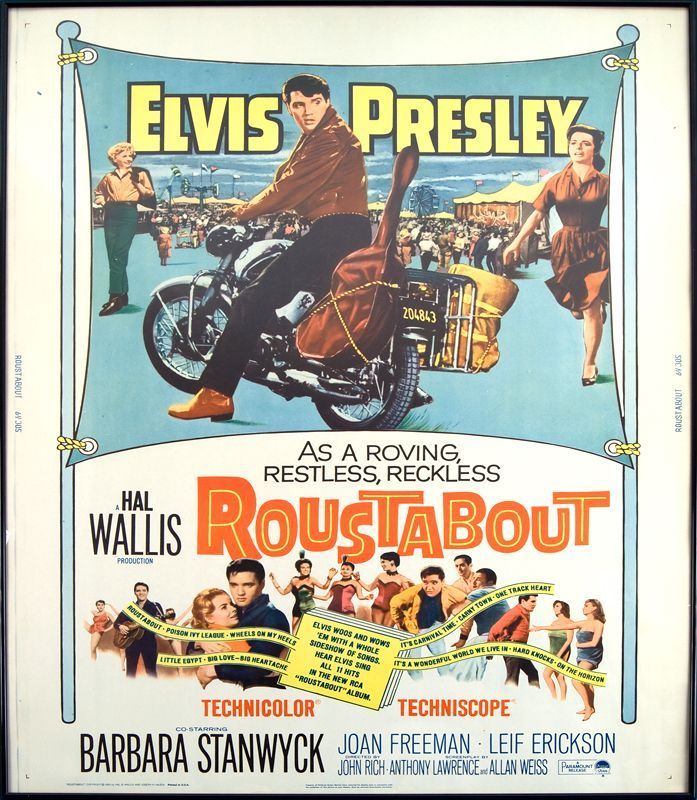
I'm not an extreme fan of Elvis Presley but it's hard not to admire the celebrity status he achieved during his entertainment career. What's most impressive to me was his ability to become arguably the most famous person on the planet during a time when there weren't as many avenues of communication that we enjoy today.

That Elvis achieved such fame with such a limited, albeit global, stage has always made me wonder what height of recognition he could have achieved had his career existed in modern times. Similar to my pondering about how modern marketers would utilize telegrams, I enjoy exploring ways Elvis’ would have been promoted with the likes of social media, the web and other tools of today. Don’t get me wrong – there’s no doubt that Elvis was huge. After all, I’m only 2 paragraphs into this post, referring to him by only his first name, and you know exactly who I’m writing about.

First, let’s look at the ways Elvis became so well-known during the 50s, 60s and 70s.
  • Radio – everyone knows the story of Elvis recording his first song at Sun Records in 1954. It wasn’t long until a larger studio signed him and took his talents nationwide. The popularity of his hit records would lead to appearances on...
  • Television – the still-budding medium showcased Elvis’ musical talents further. He knew the significance of TV - - approximately 60 million viewers watched his appearance on the Ed Sullivan show in September of 1956 - - and agreed to appear on various shows for large sums of money. His success on TV sparked ideas in Hollywood and soon executives were asking Elvis to appear in their...
  • Movies – Elvis never won any awards for his acting (he only won 1 Grammy, come to think of it) but including Elvis in your motion picture guaranteed extra ticket sales. It was a great branding move for Elvis, too. It gave people exactly what they wanted: more Elvis in any form possible. 

Elvis reportedly only made one commercial in his career so he didn’t exactly line his pockets or expand his notoriety by lending his celebrity to product endorsements. In addition to Radio, TV and Movies, live performances and word-of-mouth played significant roles in the growth of Elvis’ legend. But that’s really it. Those are huge avenues to propel fame but you have to admit that lineup doesn’t make for many channels. Today’s stars benefit from so much more: social media interaction with fans, a 24-hour news cycle, MTV (well, not so much anymore), digital music that makes for a more portable experience – the list is endless. But Elvis had (and still has) two other factors that have helped maintain his iconic status.

SCANDAL

Elvis’ later years were shrouded with scandal, from his divorce (which is sadly expected of today’s celebrities) to his drug use to his untimely death. It was all interconnected and played out in front of the world. His drug use turned him into a larger, incoherent version of himself, leaving fans puzzled at his bungled concert performances. News and information is shared so quickly and so frequently today that it takes a lot - - an awful lot - - to shock us. That requirement wasn’t as lofty back in the 70s, when Elvis’ world went into a spiral. Not only were fans truly shocked at his behavior, they couldn’t explain it. An unauthorized photo of Elvis’ corpse paved a golden road for The National Enquirer, which often uses man’s natural attraction to mystery to its advantage. This publication thrives on positioning itself as having access to information, true or not, that is normally not available - especially in the 70s and 80s.
Shadowy conspiracy theorists lapped it up (and still do – Elvis is still alive, after all) but they make up only a small portion of the biggest factor that has helped Elvis stay in the spotlight, decades after his death.

FANS

Elvis fans span the globe and seemingly overlook the weirdness from his final years. They flock to Graceland, buy his music and collect his merchandise at paces that continue to break records. It’s these fans – not the conspiracy theorists – that prompted the creation of Elvis Presley Enterprises, Inc. to manage Elvis’ estate, which was the 2nd most profitable estate of deceased celebrities in 2015.

ELVIS + MODERN MEDIA = ??? 

There’s no doubt that modern media, such as a sharp website and a verified Twitter account, has helped Elvis Presley stay current with the times and propel his estate to tremendous earnings.

A photo posted by Elvis Presley (@elvis) on

But if Elvis' career played out out today instead of the 50s, 60s and 70s, would modern media be a big asset and launch his career to an even higher level? I don’t think so.

Today’s platforms, like social media, spawned out our need to be constantly amused. That makes for frequent flame-outs. We abandon interests quickly and few entertainers have staying power these days. That’s not to say Elvis couldn’t break through – I just think the pace at which Elvis was promoted on the few avenues in his heyday (he was all over the place) would not translate to a tolerable level in today’s world. If you think about it, the lessened level of exposure in his heyday may have been what whetted appetites and made fans want more of Elvis.

These are the weird things I think about late at night. Do you agree that the existence of the web and other modern media would have hindered – and not helped – Elvis’ career? Let me know in the comments or send me a tweet!

Thank you, thank you very much for reading.

Thursday, October 22, 2015

3 More Social Media Wishes


I was satisfied with my post about my Top-3 social media wishes but since then, I've come up with a few more wishes. Just like my original wishes, these wishes are a little nitpicky but relevant enough to really enhance my experience with these particular social media outlets. Let's get right to it.

Pandora – List the Year! 

I'm not big on music. It doesn't dictate my life as much as it did when I was in high school. However, I do enjoy playing a radio in the background when I'm working on a project at home. Pandora does the trick for me. Hearing some of my favorite songs my own 90's Alternative channel really takes me back to days with fewer responsibilities (yet more angst). Pandora is great about providing details of songs such as the artists, the cover art from the album on which the song originally appeared and even the lyrics to the song. What isn’t provided is the release year of the song – and that sorta bugs me. XM Sirius displays the year of songs currently played by users and my DRV guide lists the release year of movies in the channel description. I always catch myself looking at the screen and searching for the year when Pandora plays a great song. I'm sure they have their reason for excluding the year but this would be a great addition, in my opinion.

(By the way, Pandora is a social media network because it requires a unique, personalized profile and custom channels can be shared with other users. Also, if you're in the Birmingham area and like 90's alternative music too, check out 94.9 The Alt FM. They play a lot of songs from the 90's and 00's with a tolerable amount of late 00's Emo music and today's "HEY" music.)

Google+ - Let the People Hoot! 

I enjoy using Hootsuite to schedule social media posts. It's very flexible and allows me to send messages from all of my social media messages – except Google+. Yes, you can send and schedule messages for your Google+ business page with Hootsuite, but not your personal profile. From what I've determined, this is a Google decision – they won't permit users the ability to manage their personal G+ posts with Hootsuite (or any other social media dashboard, from what I can tell). This is a real head-scratcher. It seems that Google would allow this type of connectivity if it ever wanted Google+ to shake its "ghost town" image. Sure, there are workarounds available through IFTTT but they're too convoluted. I'll just continue to keep my fingers crossed in hope of day when Google throws Hootsuite users a bone. Facebook does…just sayin'. Then again, it may not matter as Google seems to be repositioning Google+ as a business tool, according to this recent
video.


Tumblr & IFTTT – Can't We All Just Get Along? 

I use Tumblr primarily as a place to share content from others. IFTTT helps streamline a lot of "sharing steps" for many of my social media profiles. For a reason I cannot determine, YouTube and Tumblr do not want to connect via IFTTT for me. I've tried several recipes that are built to take the YouTube videos I like and instantly share them on my Tumblr. I've even tried building my own recipe to accomplish this but to no avail. It just…does…not…work. It's the only recipe I have trouble with and, even though it won't cause me to quit YouTube (never!) or Tumblr, my Tumblr experience sure would be a lot cooler if there was more harmony in this relationship.


Share your social media wishes with me in the comments below or with me on Twitter! Who knows? I may add even more wishes soon!

Thursday, July 16, 2015

Twitter Cards: Mission Accomplished


If you've been keeping track of my personal mission to teach myself how to implement Twitter Cards into my Blogger site, you may recall that I was concerned about the low number of resources that I found to be helpful towards completing my task. After posting Part II of this series, I'm happy to say that a few new resources were discovered and proved to be just what I needed.

RECAP OF WHY

In additional to the educational benefits of teaching myself about Twitter Cards, I really wanted to gain the social media benefits that come with gaining this new skill. Everyone knows that photos included in social media posts help drive up responses to said posts. Think about it ... which posts do a better job of catching your attention as you zip through your social media feeds? The posts that feature photos, right? And that's what I wanted - particularly with my tweets.

WHAT I NOTICED

I share a lot of links to articles that I find to be helpful or interesting. I noticed that when sharing links from a major website, my tweets would feature a summary of the article along with a photo. Like this:


Naturally, these types of posts produced better interaction stats than my posts that included links to my blog, which featured no such summary or photo.

I tried to compensate by including a photo file with my tweets (that promoted my blog posts) that I scheduled through Hootsuite but that did not produce the desired result. I mean, it did...but it wasn't the same.


This method positioned the photo above the tweet, includes the photo file as another link within the tweet and features no summary. Again, not exactly what I wanted.

After searching for a solution, I leaned about Twitter Cards and the different kinds of Twitter Cards. I determined that I wanted to add Summary Cards to my Blogger site. As I've mentioned in my previous posts, Blogger's mechanics presented a bit of a challenge for my project - or so I thought.

WHAT DID I DO?

Twitter's developer site actually offers a link to a Blogger user's page that explains how to edit Blogger HTML for the purpose of adding Twitter Cards. Must be legit if Twitter links to it, right? Actually, um...no.

That was a dead end so I conducted a search of my own. I tried many of the suggestions that I came across but none worked as well as the solution I found at this very helpful blog. I simply copied the code found here and pasted it into my Blogger site just as the author instructed (as well as updated the Twitter handles within the code).

The author even provided a link to Twitter's validator, a helpful tool that gives a preview of your Twitter Cards. I gave one of my recent posts a test run through the validator and initially liked what I saw. It seemed the HTML code I plugged into place almost did the trick - nice, large photo...but no summary. Something wasn't quite right and the validator told me so - I was missing a meta description, or so it said. I was sure I was missing a line of code so back to searching I went.

Almost immediately, I came across this post that helped me realized that meta description error was due to a very simple reason: I had not utilized the "Search Description" feature found within the Post Settings that every Blogger user knows about. Duh!

So, I went back into one of my posts, entered some text in the "Search Description" section and....


SUCCESS! Just like the FastCompany tweet above, I know the summary card is working because the photo is below the tweet and features a summary. Plus, response to this particular tweet saw a significant rise in clicks.

All in all, this task didn't turn out to be as difficult as I thought. But, I'm glad I took the steps to learn about Twitter Cards on my own. I hope that this, the third post of my series, provided clear details on the steps I took to accomplish my mission. If not, feel free to leave a question in the comments or reach out to me on Twitter.

Thanks for reading!

{Top Photo: Courtesy}

Thursday, April 23, 2015

How Would Modern Marketers Have Their Way with Telegrams?


The 2015 Masters Tournament marked the 40th anniversary of Jack Nicklaus' win at the 1975 tournament. While recently watching highlights of the 1975 final round showcasing the stellar play of Nicklaus, Johnny Miller and Tom Weiskopf, I noticed a pair of glaring omissions. None of the golfers were wearing hats and there were no corporate logos on their shirts.

This observation was a good reminder that the propensity for marketers to exhaust all opportunities for logo placement has rapidly grown over the years.

From promoted tweets to text ads bordering your Gmail inbox, modern communications are cloaked in marketing messages. Taking the above realization further, I wondered how modern marketers would have their way with forms of communicating that are no longer around - like telegrams.

Before we start exploring, we all would probably benefit from a quick review of what a telegram actually is...or was.

Let's say you live in Atlanta and you want to send birthday wishes to your friend in Memphis. You would simply visit your local telegraph operator and have your message transmitted to an operator in Memphis who would print your message for your friend. Telegrams were at their height in popularity before the increased use of telephones. Western Union was the most recognizable commercial telegraph operator. In fact, perform a Google image search of a 'telegram' today and countless photos of telegrams printed on Western Union telegram templates will be provided.

The following clip from NPR first aired back in 2006 when Western Union made the decision to stop its telegram service.


In an ironic twist for the modern age, "Telegram" is the name of a very popular messaging app that touts its speedy and secure delivery of mobile messages.

So how would modern marketers have their way with telegrams? I think we would see more of the same methods in play.

ADS ON THE BACK
Since the front of telegrams usually featured a uniformed look, I would expect to see modern marketers take advantage of the space on the back of telegrams. I've noticed this practice at Winn Dixie grocery stores where advertisements and coupons for other businesses are printed on their rolls of receipt paper.

HASHTAGS
Hashtags prompt targets to take action the best when they’re featured in an electronic format. But they're also seen on bumper stickers and t-shirts. Why not cover all areas and include your campaign's hashtag in a telegram?

MASS MESSAGING
It has been several years since I last received or sent a fax. However, mass messaging via fax machines is still a common technique. I know because my employer's fax machine frequently spits outs offers for health insurance and cruises - to no one in particular. The economics of sending a telegram would probably produce a poor ROI but hey, it's an idea.

In 1975, Jack Nicklaus earned $40,000 for winning the Masters. Jordan Spieth earned $1,800,000 for winning in 2015. Telegrams trended in a much different direction. Considering all the ways we communicate (and advertise) in today's world, is that a good thing? Please let me know by sending me a telegram tweeting me @nick_baggett.

Thanks for reading!

Thursday, June 12, 2014

Wedding Hashtags


In 2009, my wife excelled at her calligraphy hobby so quickly that she began receiving requests to write invitations and address envelopes for weddings in the Birmingham area. I’ve always been impressed with her skill and dedication. After particularly large jobs, I like to pick her brain about any new trends that she noticed. When she recently shared an example of a modern communications tool elbowing its way into her time-honored craft, I wasn’t surprised.

It seems that more and more brides are featuring social media hashtags as a way to further memorialize their special day. And why not? A quick hashtag search on Twitter or Instagram can be a great way to harken memories of your wedding day years from now.

My wife was sweet enough to answer some additional communications-type questions about wedding hashtags.

Prior to hashtags, have you noticed any other examples of people incorporating digital or social media into their wedding? 
Wedding websites may not be as common as they once were but they were the first real example I noticed. I would say that Pinterest plays a huge role in wedding planning these days. Pinterest is great because it gives access to ideas and concepts that brides-to-be may have never considered. 

Do these brides indicate a specific social media platform through which these hashtags are to be used? 
I haven’t seen where they specifically say where to use the hashtag but Instagram seems to get the most activity. 

Are these hashtags being featured on wedding invitations or kept to less formal places? 
I recently wrote a hashtag for a sign that was placed by the guest book at the couple’s wedding reception. I think that hashtags will be regularly featured on wedding announcements like “save the date” cards and maybe on the wedding program. I also think it will be a long time before we see hashtags on formal invitations. 

As a calligrapher, what suggestions would you give brides-to-be when they create their wedding hashtag?
You might want to be mindful about using numbers in your hashtag. If your calligrapher has a more formal style, chances are he or she will write out the house, street or apartment number on your invitations and envelopes. For the sake of space (and hand cramps!) you probably don’t want numbers in your hashtag. 

Did the “#” symbol already exist in the world of calligraphy or did you have to build a version from scratch? 
I work best when I have an example to study. I Googled “calligraphy hashtags” and quickly discovered that there aren’t many samples to go by. I ended up creating a hashtag from scratch that looked nice and formal. I would say that it worked - one recent hashtag I wrote helped generate over 100 uses on Instagram alone! 

It was very interesting to learn about this case of old school communications clashing with new school media and I’m thankful that my wife shared some of her observations. Please be sure to visit her calligraphy blog if you would like to see some of her beautiful work.

Thanks for reading!