Showing posts with label Television. Show all posts

Thursday, January 21, 2016

Would a Modern-Day Elvis Benefit from Modern-Day Media?


I'm not an extreme fan of Elvis Presley but it's hard not to admire the celebrity status he achieved during his entertainment career. What's most impressive to me was his ability to become arguably the most famous person on the planet during a time when there weren't as many avenues of communication that we enjoy today.

That Elvis achieved such fame with such a limited, albeit global, stage has always made me wonder what height of recognition he could have achieved had his career existed in modern times. Similar to my pondering about how modern marketers would utilize telegrams, I enjoy exploring ways Elvis’ would have been promoted with the likes of social media, the web and other tools of today. Don’t get me wrong – there’s no doubt that Elvis was huge. After all, I’m only 2 paragraphs into this post, referring to him by only his first name, and you know exactly who I’m writing about.

First, let’s look at the ways Elvis became so well-known during the 50s, 60s and 70s.
  • Radio – everyone knows the story of Elvis recording his first song at Sun Records in 1954. It wasn’t long until a larger studio signed him and took his talents nationwide. The popularity of his hit records would lead to appearances on...
  • Television – the still-budding medium showcased Elvis’ musical talents further. He knew the significance of TV - - approximately 60 million viewers watched his appearance on the Ed Sullivan show in September of 1956 - - and agreed to appear on various shows for large sums of money. His success on TV sparked ideas in Hollywood and soon executives were asking Elvis to appear in their...
  • Movies – Elvis never won any awards for his acting (he only won 1 Grammy, come to think of it) but including Elvis in your motion picture guaranteed extra ticket sales. It was a great branding move for Elvis, too. It gave people exactly what they wanted: more Elvis in any form possible. 
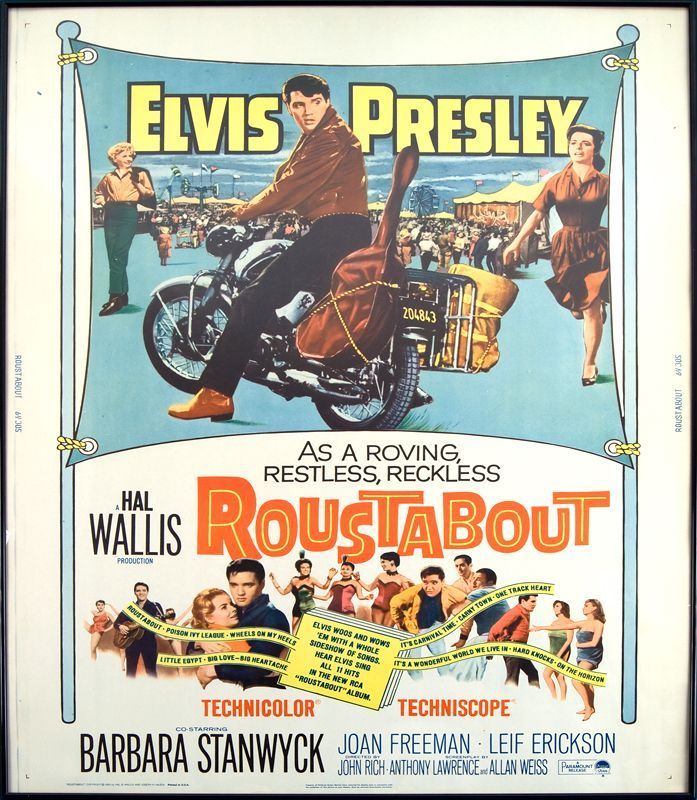
Elvis reportedly only made one commercial in his career so he didn’t exactly line his pockets or expand his notoriety by lending his celebrity to product endorsements. In addition to Radio, TV and Movies, live performances and word-of-mouth played significant roles in the growth of Elvis’ legend. But that’s really it. Those are huge avenues to propel fame but you have to admit that lineup doesn’t make for many channels. Today’s stars benefit from so much more: social media interaction with fans, a 24-hour news cycle, MTV (well, not so much anymore), digital music that makes for a more portable experience – the list is endless. But Elvis had (and still has) two other factors that have helped maintain his iconic status.

SCANDAL

Elvis’ later years were shrouded with scandal, from his divorce (which is sadly expected of today’s celebrities) to his drug use to his untimely death. It was all interconnected and played out in front of the world. His drug use turned him into a larger, incoherent version of himself, leaving fans puzzled at his bungled concert performances. News and information is shared so quickly and so frequently today that it takes a lot - - an awful lot - - to shock us. That requirement wasn’t as lofty back in the 70s, when Elvis’ world went into a spiral. Not only were fans truly shocked at his behavior, they couldn’t explain it. An unauthorized photo of Elvis’ corpse paved a golden road for The National Enquirer, which often uses man’s natural attraction to mystery to its advantage. This publication thrives on positioning itself as having access to information, true or not, that is normally not available - especially in the 70s and 80s.
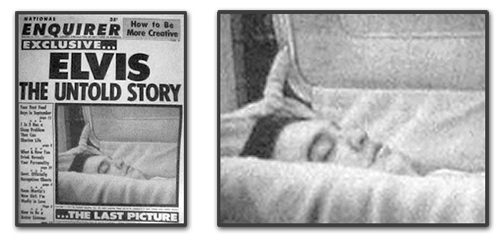
Shadowy conspiracy theorists lapped it up (and still do – Elvis is still alive, after all) but they make up only a small portion of the biggest factor that has helped Elvis stay in the spotlight, decades after his death.

FANS

Elvis fans span the globe and seemingly overlook the weirdness from his final years. They flock to Graceland, buy his music and collect his merchandise at paces that continue to break records. It’s these fans – not the conspiracy theorists – that prompted the creation of Elvis Presley Enterprises, Inc. to manage Elvis’ estate, which was the 2nd most profitable estate of deceased celebrities in 2015.

ELVIS + MODERN MEDIA = ??? 

There’s no doubt that modern media, such as a sharp website and a verified Twitter account, has helped Elvis Presley stay current with the times and propel his estate to tremendous earnings.

A photo posted by Elvis Presley (@elvis) on

But if Elvis' career played out out today instead of the 50s, 60s and 70s, would modern media be a big asset and launch his career to an even higher level? I don’t think so.

Today’s platforms, like social media, spawned out our need to be constantly amused. That makes for frequent flame-outs. We abandon interests quickly and few entertainers have staying power these days. That’s not to say Elvis couldn’t break through – I just think the pace at which Elvis was promoted on the few avenues in his heyday (he was all over the place) would not translate to a tolerable level in today’s world. If you think about it, the lessened level of exposure in his heyday may have been what whetted appetites and made fans want more of Elvis.

These are the weird things I think about late at night. Do you agree that the existence of the web and other modern media would have hindered – and not helped – Elvis’ career? Let me know in the comments or send me a tweet!

Thank you, thank you very much for reading.

Thursday, December 17, 2015

Great Uses of Social Media By Late-Night Shows


These days, it’s not enough for a popular TV show to be entertaining while episodes are actually airing. Nope – that entertainment has to endure between episodes. I recently wrote about the creative ways certain shows are relying on Twitter to stay top-of-mind. Now I want to take a closer look at the social media tactics used by a specific type of programming: Late-Night shows.

Before diving in, let me clarify that the following examples of excellent social media usage aren’t intended to shine a spotlight on the show hosts. Even though some of them are great follows on a personal level, this post highlights the unique social media maneuvers performed for the betterment of the actual show. Let’s begin with a host that built his Late-Night credibility one social media post at a time.

JIMMY FALLON | Hashtags and Games

Fallon gets it. He’s perfected the craft of using social media to interact with fans off-air. He invites his Twitter followers to play along in creative hashtag games that range from sharing weird personal stories to creating funny alternative lyrics to popular songs.


JIMMY KIMMEL | Halloween and Viral Twerking

Kimmel and his staff know the power of video. Each year, Kimmel fans are invited to participate in an always-funny Halloween stunt. Parents are challenged to film the reactions of their children when told their Halloween candy is all gone. The submissions get better every year!


But that’s not the only YouTube success the Kimmel show has enjoyed. You may remember this viral video…


…that turned out to be staged by Kimmel all along!


JAMES CORDEN | Car Karaoke

Corden took the helm of the Late Late Show in late 2014 and quickly educated American on what his British fans already knew: he’s really into music. That’s easily noticed in his wildly popular Car Karaoke skits, which are smartly posted on the CBS website and the show's Facebook page before it reaches viral proportions on YouTube.

Our #CarpoolKaraoke with One Direction is finally here and totally worth the wait.
Posted by The Late Late Show with James Corden on Wednesday, December 16, 2015


Our decreasing attention spans and endless info cravings are two big factors as to why social media is becoming a required promotional tool in the entertainment industry. For these Late-Night shows, social media provides another access points to fans in a time when the viewing or original airings is not guaranteed. If you know of other examples that you would like to share, send them my way on Twitter. Thanks for reading!


Top Photo {Courtesy}

Thursday, February 12, 2015

I Hope Radio Never Leaves


While recently reading up on the demise of RadioShack, I was reminded about how this outlet for batteries, robotics, fuses and everything in between originated: as a source for equipment to the budding radio industry and hobbyists back in 1921. This realization sent me down a rabbit trail of memories about how radio has impacted my life.

My grandfather operated an appliance store that sold and serviced radios back during a time when families gathered around large radio cabinets in their living rooms for their evening entertainment. My father took over the store as more and more families transitioned to televisions and VCRs. But like his father, Dad isn't fond of throwing things away. Many of my grandfather's replacement tubes and other radio parts remain in storage. I invite any radio enthusiasts that happen to be reading to contact me for some great deals!

Early my career, my duties allowed me to become very familiar with radio advertising. I made a lot of contacts at stations in small markets and I'm still appreciative of their guidance. One particular gentleman that I worked with arranged for me to be a frequent studio guest at his station and the play-by-play announcer for the local high school's football games that they covered. Thankfully, no copies of those broadcasts exist … but it would be fun to listen to them again in all their cringe-worthiness.

These days, I work with Birmingham radio stations when the budget allows. I’m very excited about what will be a new venture for me: internet radio. I just kicked off a campaign with Pandora that incorporates audio and visual ads. The incredible targeting provided by this service estimates a huge amount of impressions and I'm anxious to dive into the wealth of analytics as the campaign proceeds.

Radio has a lot competition in today's world but I think it will fare better than RadioShack. Satellite radio is great but these days I find myself tuning my car's radio to local stations more than ever. The devices we enjoy today are used on such a personal, isolated level that I don't think we'll ever go back to gathering around a radio cabinet in groups. Radio has actually had a big impact on me. I hope it never leaves.

Thursday, November 21, 2013

More is Less for Napa's TV Ads


The old saying that "more is less" can really go both ways, I suppose. I mean...it wouldn't be a bad thing to have more money but maybe the increased taxes, relatives that emerge from the woodwork and other problems associated with increased wealth would contribute to having less sanity.

This saying came to mind when I recently saw NAPA's latest television commercial during a college football game:


Now watch one of the ads that NAPA ran in the last few years and let’s make some MORE / LESS comparisons.


MORE
  • NAPA definitely has more advertising money to work with as they've hired Patrick Warburton to do a manly voice-over.
  • There’s more silence in this year’s ad. It’s very awkward and very unlike the previous ads that have featured musical jingles.
  • There’s more specific NAPA product placement in this newer ad too. 
LESS
  • There’s less of that jingle that everyone either loved or hated in the new crop of ads.
  • The newer ad makes less of a memorable impression.
  • I've heard less “street chatter” about the new ad. Last football season, the NA-NA-NA-NAPA jingle could be heard recited all the time.
I consider the 2013 NAPA ads to be of high quality and they do a great job of representing NAPA’s brand. I’m sure they’ll positively influence some purchase decisions too. But did MORE mean LESS for NAPA television ads? It seems that way. Maybe it’s just me but I prefer the earlier ads.

Thursday, October 10, 2013

New Advertisements on Old TV Shows

The practice of inserting digital advertisements for current products into older television programs is not all that new but it’s still in an infant stage. In fact, it seems that there’s only one company that has developed a niche for digital product placement. Seamless Brand Integration can place ads or signs for current products into reruns of popular TV shows that originally aired a few years ago.

It’s been well documented on the Internet that the studio responsible for How I Met Your Mother has been a big user of this technology. Some viewers don’t appreciate this move but I think it’s a smart idea and I also think that we’re going to see more of this type of product placement. I've already seen some examples of shows making room, if you will. Check out this screen capture from a 2012 episode of 30 Rock:


I noticed this blank screen when watching this episode instantly on Netflix the other day. I’d be willing to bet that when a rerun of this episode eventually makes it to WGN or some other cable network, we’ll see an advertisement on that blank television.